
Lalibela
The New Jerusalem of Africa
Lalibela is a deeply sacred highland town nestled in the Lasta Mountains of the Amhara Region, approximately 645 km north of Addis Ababa. Sitting at an altitude of around 2,480 metres above sea level, it is surrounded by dramatic ridges, terraced farmlands, and wide highland valleys. Named after King Gebre Meskel Lalibela of the Zagwe dynasty (c. 1181–1221 AD), the town’s defining legacy is its eleven medieval rock-hewn churches — carved entirely from solid red volcanic rock. The king’s vision was to create a “New Jerusalem” for Ethiopian Christian pilgrims. UNESCO inscribed the Rock-Hewn Churches of Lalibela on its World Heritage List in 1978.
Geography and Setting
Lalibela sits on a sloped plateau in the Lasta Mountains, part of the northern Ethiopian Highlands. Sheer basalt escarpments and deep valleys surround the town, with terraced fields cascading down the hillsides. The symbolic River Jordan — named by King Lalibela himself — runs through the church complex, dividing its northern and southern clusters.
Climate and Environment
Thanks to its high altitude, Lalibela enjoys a mild highland climate year-round. June falls in the dry season, offering excellent visibility across the valleys, a refreshing highland breeze, and daytime temperatures pleasantly suitable for outdoor exploration. The landscape transitions from dry highland brown to its first flush of green at this time of year.
The Eleven Rock-Hewn Churches
Carved from the earth itself and divided into two main clusters by the River Jordan, the churches of Lalibela represent one of the most extraordinary feats of engineering in the ancient world.
Bete Giyorgis (House of St. George)
Standing apart from both clusters, Bete Giyorgis is the most iconic monument in Ethiopia — a perfectly freestanding monolithic church hewn 12 metres straight down into the earth. Its remarkable cruciform (cross-shaped) roof is carved in three interlocking tiers. Built last of all eleven churches and dedicated to the patron saint of Ethiopia, it was the masterwork of the entire complex. Visitors descend a narrow rock trench to arrive at the entrance, looking up at extraordinary hewn walls rising above them.
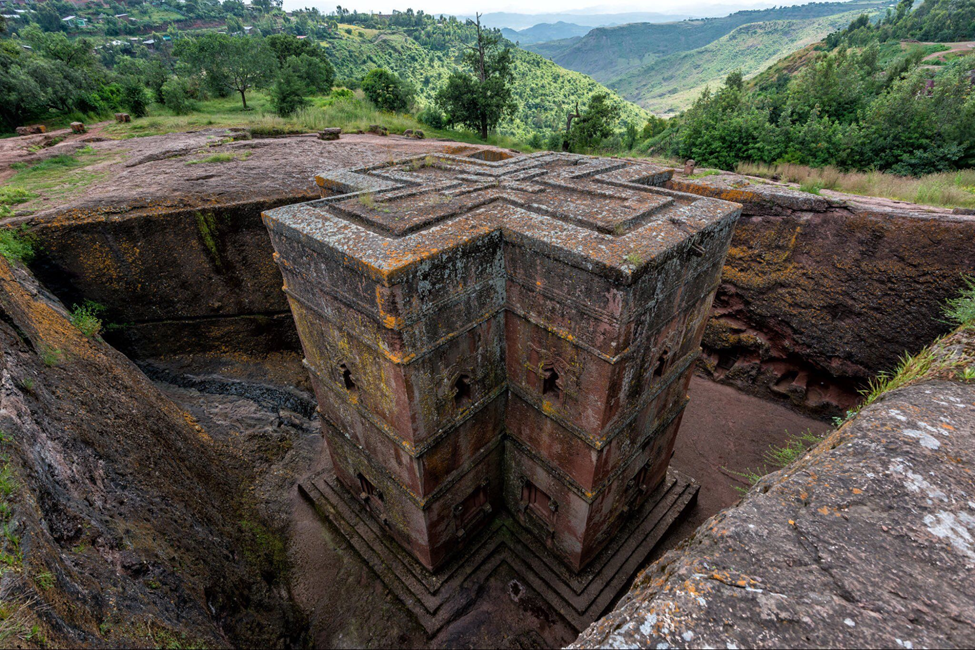
Lalibela and its Surroundings
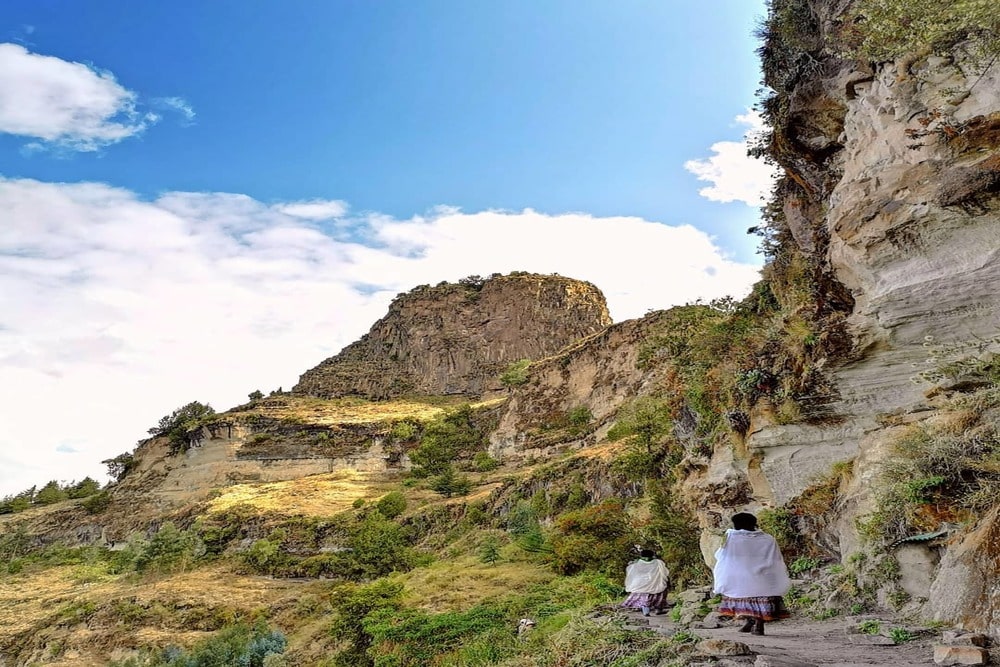

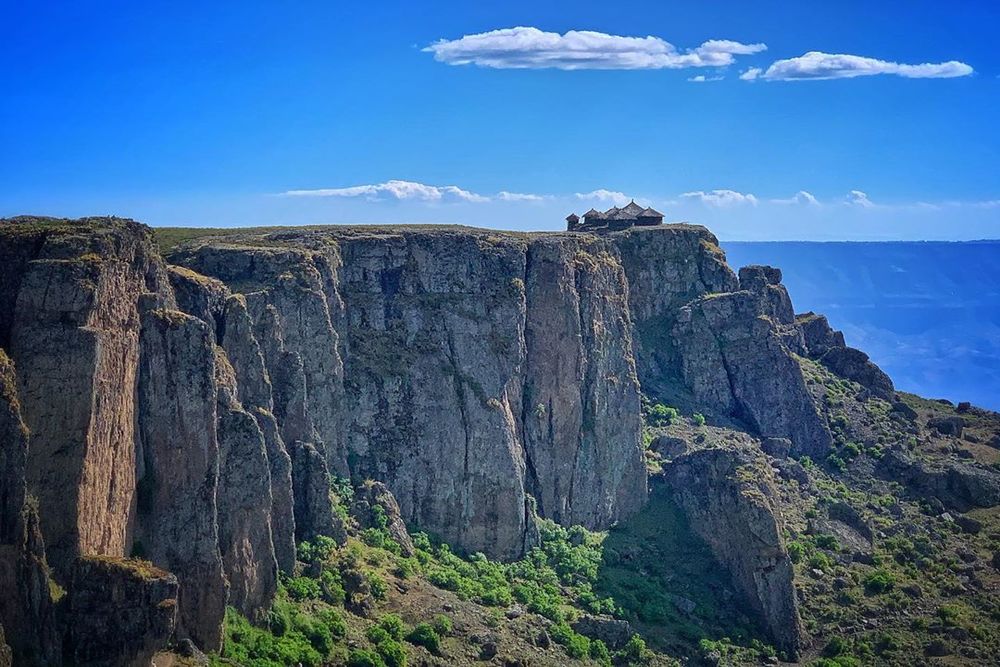
Asheton Maryam Monastery
3 km from town — mountain summitA 14th-century monastery perched atop the flat-topped mountain above Lalibela, reached through a narrow rock crevice. Rewards the ascent with sweeping 360° panoramas. Inside, ancient illuminated Ge’ez manuscripts and sacred artefacts have been preserved for centuries.
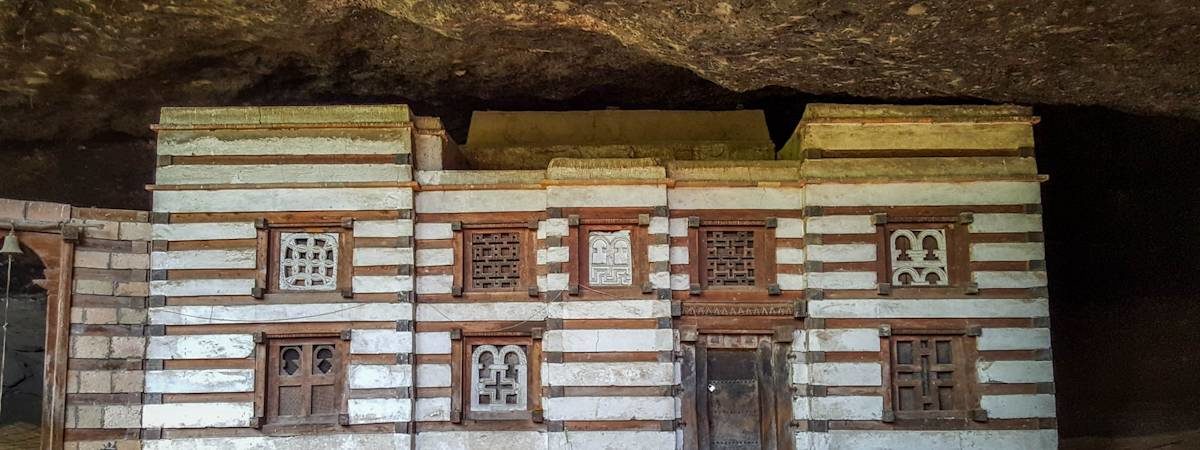

Yemrehane Kristos Church
35 km northeast — cave settingOlder than the Lalibela churches, this extraordinary 11th-century church is built inside a vast natural cave surrounded by ancient juniper forests. Its Aksumite architecture has survived nearly a thousand years in pristine condition.
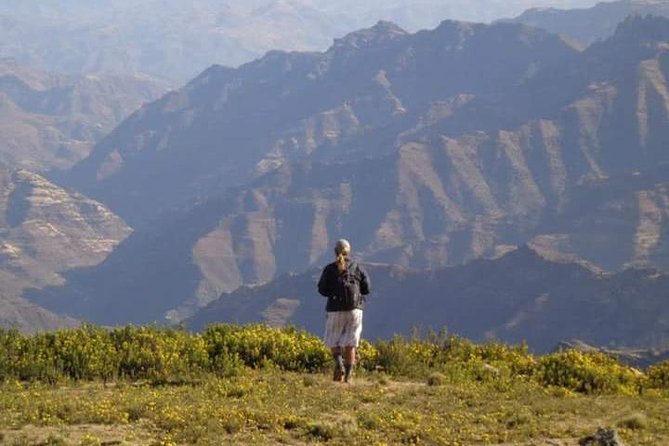

Mount Abuna Yosef
4,260 m — multi-day trekOne of Ethiopia’s highest and most rewarding trekking peaks, with trails through Afro-alpine moorlands carpeted with giant lobelia, past highland villages, and through habitats of gelada baboons and the rare Ethiopian wolf.
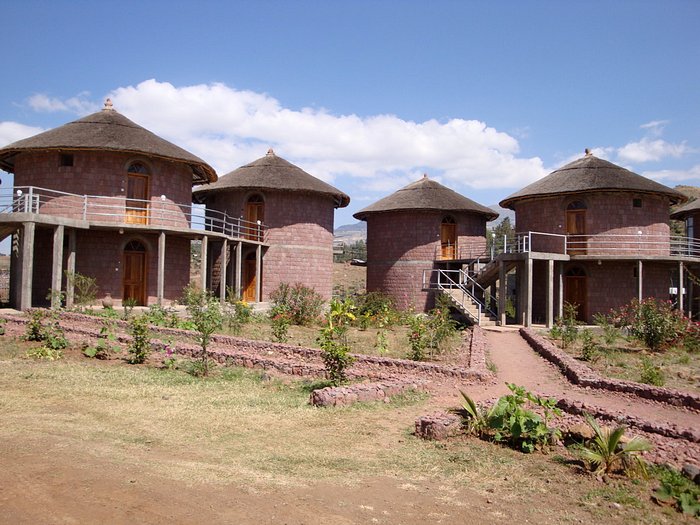
Lasta Tukul Village
Around the church complexTraditional two-storey circular houses built from local red stone and topped with conical thatched roofs, listed as part of the UNESCO heritage landscape. These distinctive dwellings offer visitors a glimpse of an architectural tradition unchanged for generations.